Home / Renovation Notes / Bathroom Cost Factors
RENOVATION NOTES — COST FACTORS
What Affects the Cost of a Bathroom Renovation
Homeowners usually want to know this first, and it’s a fair question. The straight answer is that I can’t give you a meaningful figure for your bathroom until I’ve seen it. Cost, timeframe and the work involved depend on three things: the existing property, the materials you choose and the scope you settle on.
By Ivan Bodnar, Home Renovation Specialist
01 — THE EXISTING ROOM
The room you already have
Two bathrooms the same size can need very different amounts of work. Before anything new goes in, I look at what’s there now: the condition of the walls and floor, how flat and firm the surfaces are, any signs of moisture or movement, and how the old finishes were put on.
A surface in good order needs less preparation. One that’s uneven, damaged or built up over several earlier renovations needs more, and preparation is part of the cost. Surface preparation is not something I skip to bring a number down.
Some existing conditions can only be seen once the old tiles and finishes come off. If that happens, I show you what I’ve found and explain the options before going any further. You can read more in What Can Appear When Old Tiles Come Off.
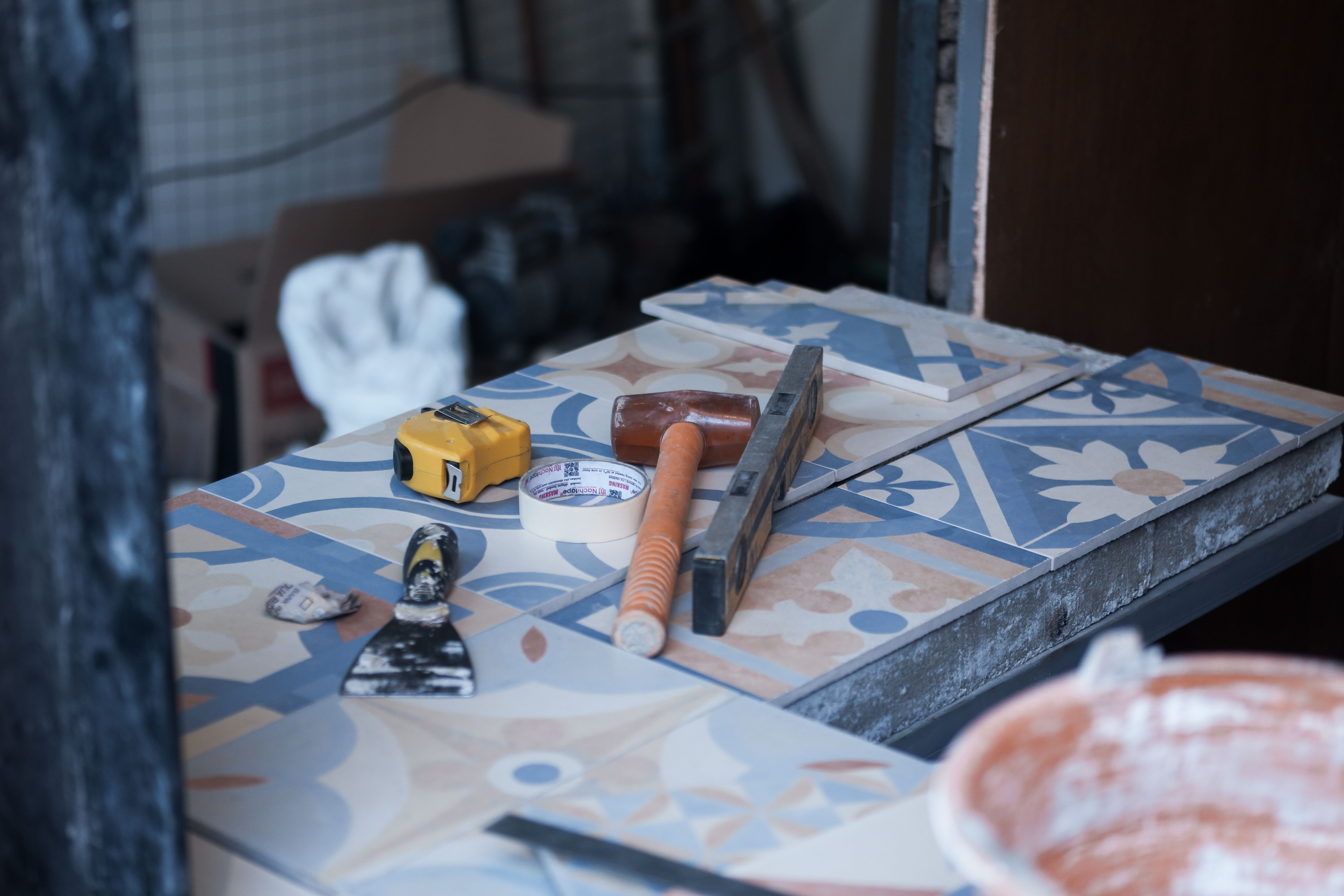
Reference photo: tiling tools set out beside patterned tiles.
02 — YOUR MATERIALS
The materials you choose
Tile choice affects more than the price of the tiles. Large-format tiles, mosaics and patterned tiles each need a different amount of handling, cutting and setting out. A detailed pattern, or a lot of cuts around fixtures, takes longer than a simple layout. Grout, trims and edge details add to it too.
Size and format also change the preparation. A large-format tile needs a flatter surface underneath than a small one, so the floor or wall may need more levelling before it goes down. Small tiles and mosaics are more forgiving of the surface but take more time to set out and grout. Either way, I plan the layout around the room so the cuts sit where they make sense.
I’m happy to talk through how a tile you like changes the work, so you can weigh that up before you decide.
03 — THE SCOPE
What the job actually includes
Scope is simply what the work covers. It’s often the biggest difference between one bathroom renovation and another. These are the questions I work through with you at the start.
A full renovation, or retiling?
Walls, floor or both, and whether the layout stays as it is.
What’s coming out?
Removing existing tiles and fixtures adds work, and that’s when existing conditions show themselves.
Do plumbing or electrical items change?
Appropriately licensed specialists complete those components, and that affects both planning and cost. See how licensed work fits in.
Is there related work?
For example plasterboard and plastering or painting around the tiled areas.
04 — GETTING WRITTEN FIGURES
How you get a figure you can plan around
Any general pricing guidance you come across is only guidance. Specific figures for your bathroom come from a detailed written quotation based on your property, your materials and the agreed scope.
STEP 1
Free on-site assessment
I come and look at the room myself, check the existing conditions and talk through what you want to achieve.
STEP 2
Detailed written quotation
The quotation sets out the work and materials in writing, so you can see what is included before you decide.
STEP 3
If something turns up
If concealed conditions appear once old finishes are removed, I explain them and the options directly before any change goes ahead.
BEFORE YOUR ASSESSMENT
A short checklist
☐ Note what bothers you most about the bathroom now.
☐ Decide whether you’re thinking of retiling or a fuller renovation.
☐ Collect a few tile ideas, even rough ones.
☐ Take some photos of the room if you can.
☐ Think about any timing you need to plan around.
When you’re ready, Discuss Your Project →
Related reading: On-site Assessment & Detailed Written Quotation · Bathroom Renovations · Why Surface Preparation Matters · Quotation & Work Terms