CHAPTER 06 — PLASTERING
Plasterboard Installation & Plastering
Most finishes in a home sit on a wall. Before tiles or paint go on, that wall needs to be sound, flat and ready. I install plasterboard and do plastering as part of home renovations in Bentleigh and the surrounding suburbs, usually as the step before tiling or painting.

Reference photo: checking a wall before the next layer goes on.
01 — WHERE IT FITS
Part of the renovation, not a separate project.
Plastering often comes up halfway through another job. Old tiles come off a bathroom or kitchen wall and the surface underneath is uneven, patched or damaged. A wall gets opened up so a licensed specialist can reach plumbing or wiring. Or a room needs a better base before it is repainted.
In each case the wall has to be put right before the visible finish goes on. Because I do the plastering as well as the wall and floor tiling and painting, I can plan the surface around what will go on top of it. You also deal with the same person for the whole job.
This is practical renovation work on wall surfaces inside your home. It does not include structural changes, engineering or design work.
02 — REPAIR OR REPLACE
Patch, repair or new plasterboard?
There is no single answer. It depends on the condition of the existing wall, the finish planned for it, and how much of the old surface is still sound once it has been checked.
When a repair may be enough
Localised damage such as holes, cracked joints or small areas left uneven after fittings are removed can often be repaired and blended in. This is common before painting, where the rest of the wall is in reasonable condition.
When replacement makes more sense
If the board is badly damaged, soft or no longer flat across a large area, repairs on top can just carry the problem through to the new finish. In that case, installing new plasterboard is usually the more practical solution.
03 — OPTION A — A REPAIR
Signs a repair is likely
Holes left where fittings, rails or cabinets have come off.
Fine cracks along joints or around a door or window frame.
Dents, scuffs or a few popped fixings in board that is otherwise firm.
A wall that stays reasonably flat when checked with a straightedge, with the damage limited to small areas.
03 — OPTION B — NEW PLASTERBOARD
Signs new board is likely
Board that feels soft, crumbles or flexes when pressed.
Staining or swelling over a large area, often found behind old tiles. Where moisture is the cause, its source is dealt with first, by an appropriately licensed specialist if plumbing is involved.
Board torn or broken away when old tiles were removed.
Layers of old patching, or a wall out of flat across a wide area, especially where tiles are going on.
I make the final call once I’ve checked the wall in person. Some of these conditions only show up after the old finish is off. If that happens, I explain the options before going further.
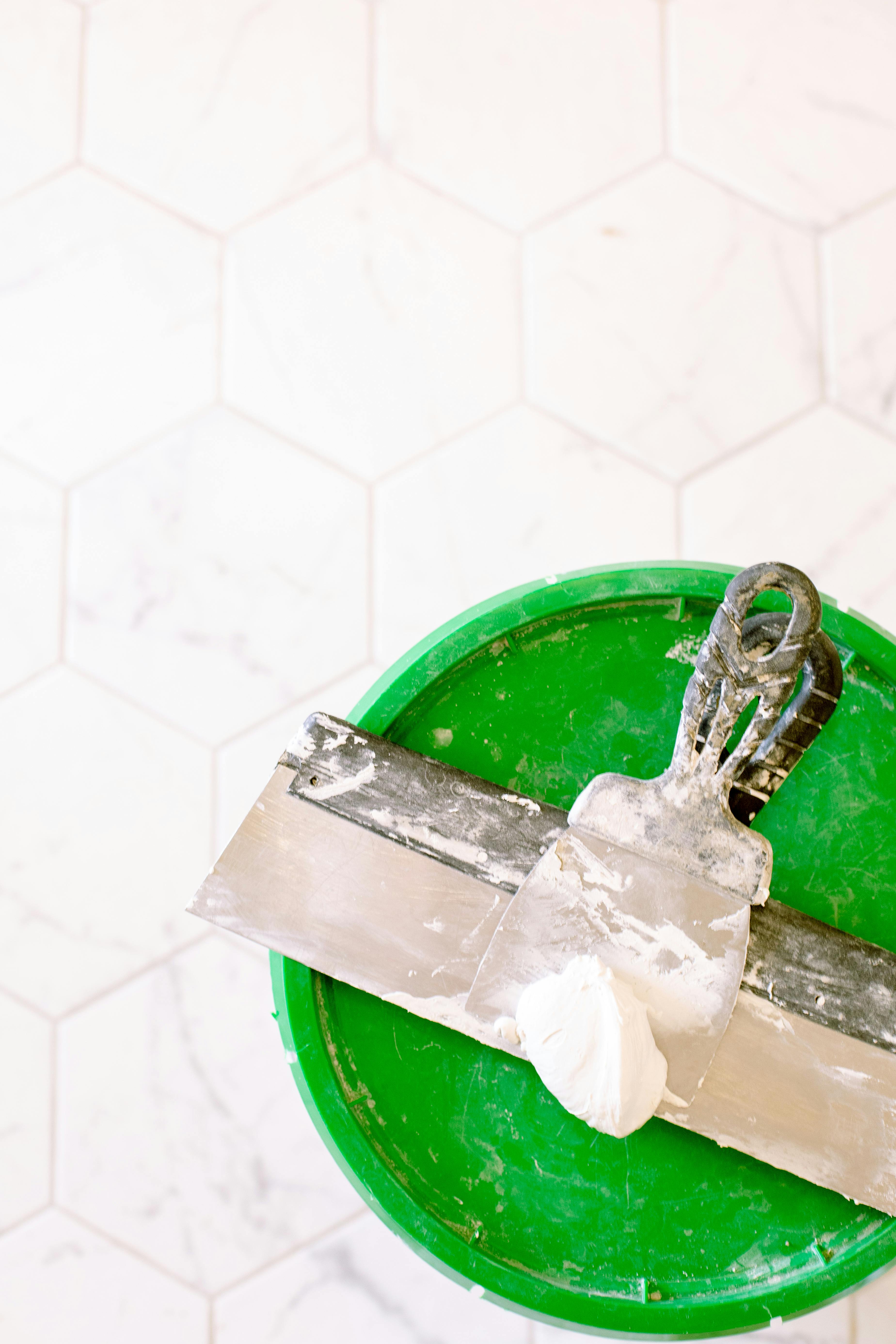
Reference photo: compound and trowel between coats.
04 — READY FOR THE FINISH
Tile and paint ask different things of a wall.
Paint shows every dip and ridge when the light hits the wall from the side, so the surface has to be smooth and even. Tiles hide fine texture, but the wall behind them has to be flat and firm or the tiles will not sit true.
So a wall that is ready for paint is not automatically ready for tile, and the reverse is also true. I check each wall against the finish planned for it, then prepare it for that finish.
RELATED READING
Bathroom Renovations
Kitchen Renovations
Interior & Exterior Painting
Bentleigh & Surrounding Melbourne Suburbs
If you have a wall that needs attention before new tiles or paint, send me a few details through the enquiry form, such as your suburb, the room and what’s happening with the wall. I’ll look at what you’ve described and we can talk through the practical options.
Photos help. The form doesn’t take attachments, so email them to [email protected] or mention in your message that you have some and I’ll ask for them.