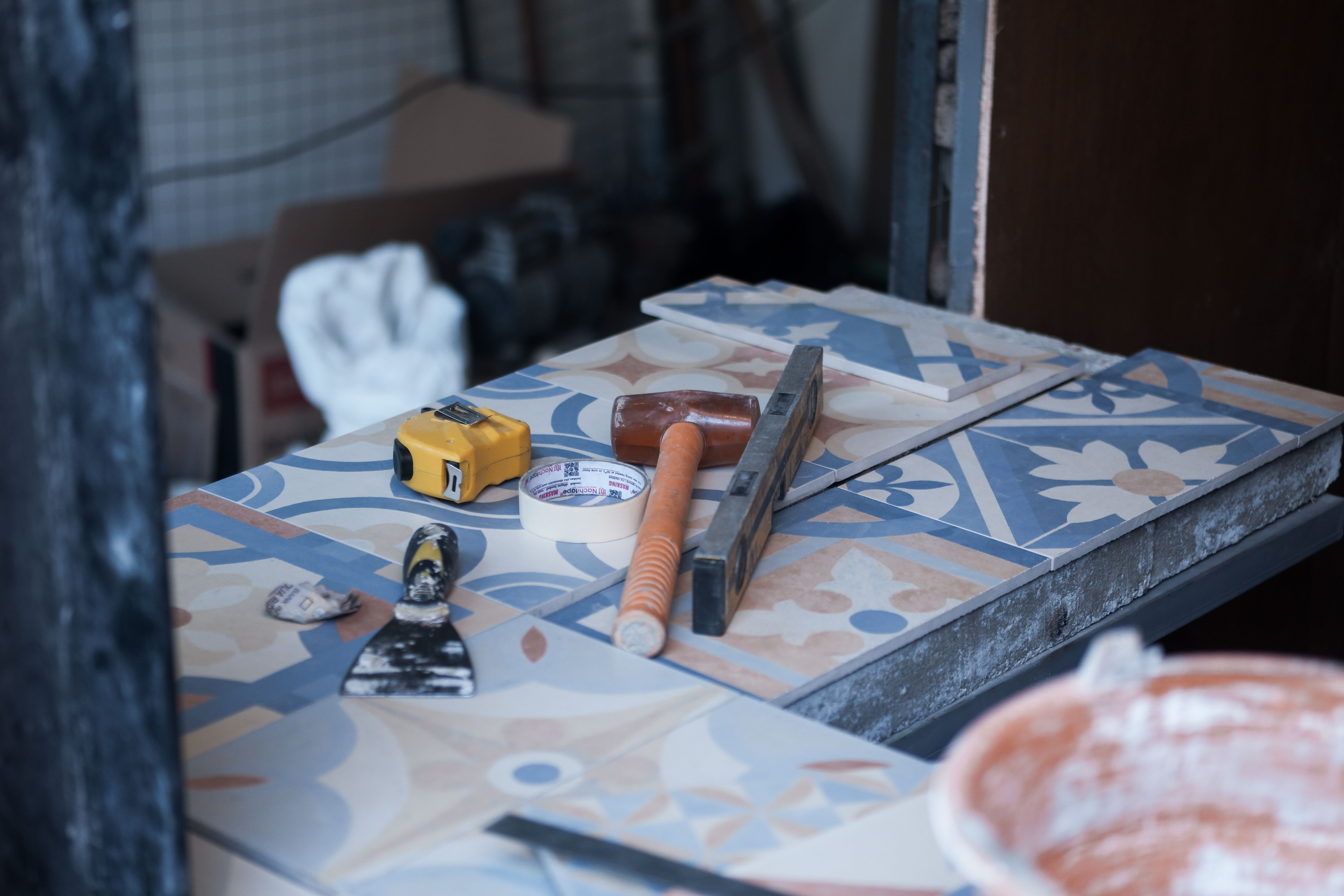
Reference photo: tiling tools and patterned tiles laid out at a work site.
Home / Renovation Notes / Licensed Trades
RENOVATION NOTES — LICENSED TRADES
How Plumbing and Electrical Work Fits Into Your Renovation
Most bathroom, kitchen and laundry renovations involve more than tiles. When a job includes plumbing or electrical components, I don’t do that work myself. Appropriately licensed specialists complete it. This note explains how that part fits around the tiling and surface preparation I do.
By Ivan Bodnar, Home Renovation Specialist
THE SHORT ANSWER
I tile and prepare. Licensed specialists do the licensed parts.
I’m an independent home renovation specialist. My main work is wall and floor tiling, surface preparation and practical improvements to bathrooms, kitchens and laundries in Bentleigh and surrounding Melbourne suburbs.
I don’t personally offer licensed plumbing or electrical services. When your renovation includes those components, such as moving a tap or changing a power point, appropriately licensed specialists complete them. Questions about the requirements for that work belong with the licensed specialist doing it, so I don’t give advice on permits or compliance for trades outside my own.
WHERE IT FITS
Where licensed work sits in the sequence
Step numbers are only there to show order. Every job is planned around its own existing conditions.
01
On-site assessment
I look at the existing conditions and talk through what you want to change. If the work touches plumbing or electrical components, I note that early.
02
Detailed written quotation
The quotation sets out the tiling, preparation and renovation work I will carry out, so it’s clear which components sit with appropriately licensed specialists.
03
Licensed components
Licensed specialists complete the plumbing and electrical parts. Where possible, fixture and outlet positions are settled before the surfaces around them are finished.
04
Preparation and tiling
Once those positions are known, I prepare the surface and tile around them. Moving a position after tiling usually means lifting finished work.
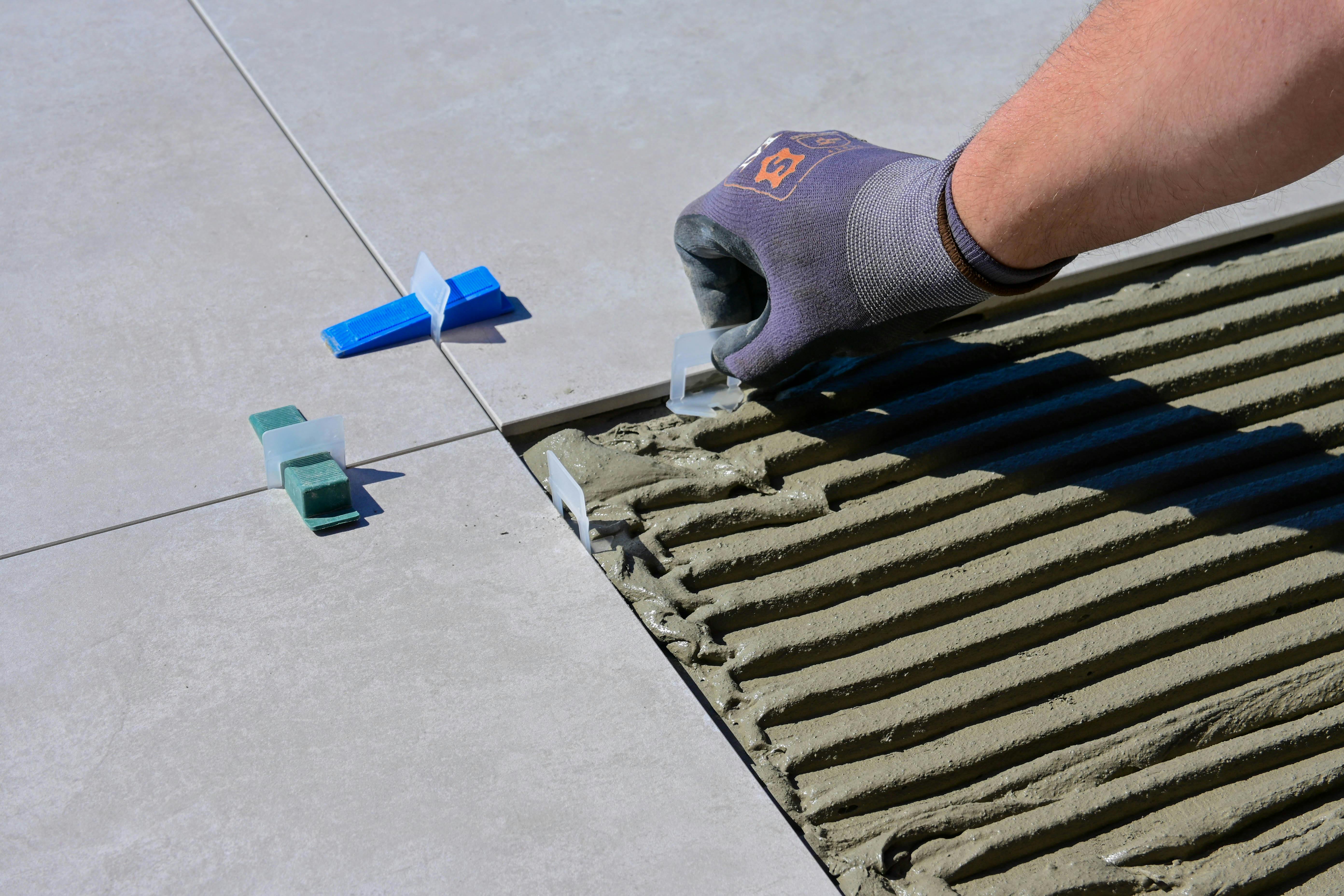
Reference photo: a floor tile placed beside fresh adhesive, with levelling clips between the joints.
BEFORE WORK STARTS
Questions to raise at your assessment
Does my project involve plumbing or electrical components?
Some updates only change the surfaces. Others change what sits behind them. Knowing which one you have shapes the whole plan.
Are fixture and outlet positions staying where they are?
If they stay, the licensed work is usually simpler. If they move, it has to be planned before the tiling layout.
What if something turns up behind the old finishes?
Some concealed conditions only become apparent once existing finishes are removed. I discuss them with you directly when they appear. More on this in What Can Appear When Old Tiles Come Off.
How does licensed work affect cost and timing?
Costs and timeframes depend on the existing property, the materials you choose and the agreed scope. Any pricing is general guidance until it appears in a detailed written quotation.
FROM IVAN
Fixture and outlet positions are settled before I tile. I organise my work around them, check it as I go and raise any concerns with you directly.
Licensed work and tiling depend on each other. A tiled finish depends on everything decided before the first tile goes down, and that includes the parts other trades complete. My part is to plan the tiling around them, organise my own work carefully, check it as I go and raise any concerns with you directly.
RELATED READING
Keep reading
Why Surface Preparation Matters as Much as the Finish
What Affects the Cost of a Bathroom Renovation
On-site Assessment & Detailed Written Quotation
Bathroom Renovations · Kitchen Renovations · Laundry Renovations
If your renovation may involve plumbing or electrical components, the simplest place to start is a free on-site assessment. Discuss your project → or read the Quotation & Work Terms.